
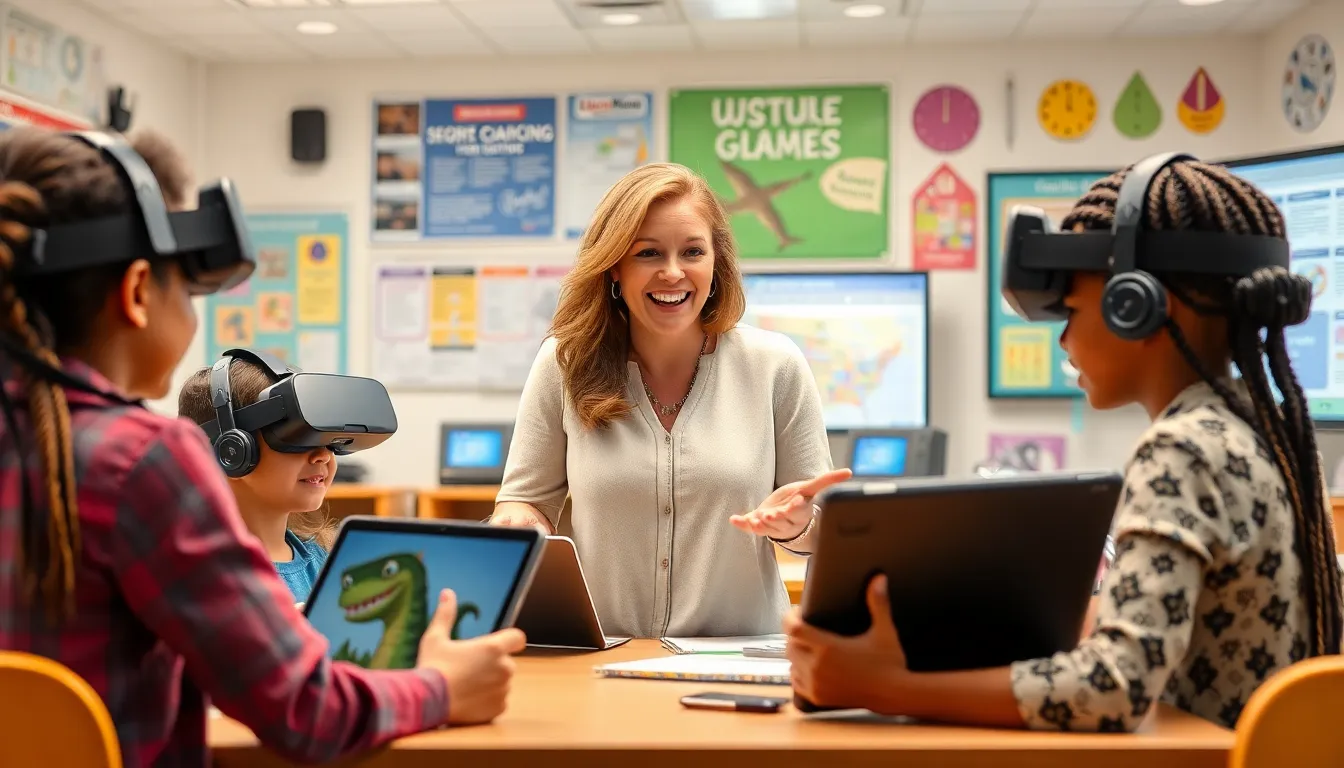
In today’s fast-paced world, education is evolving faster than a cat meme goes viral. Edtech programs are at the forefront of this revolution, blending technology with learning in a way that makes even the most reluctant students perk up. Imagine classrooms where students can explore virtual worlds, collaborate on projects with peers across the globe, and learn at their own pace—all while avoiding the dreaded textbook.
Overview Of Edtech Programs
Edtech programs enhance educational experiences by incorporating technology within learning environments. These programs support interactive learning through tools such as tablets, online platforms, and educational apps. Moreover, they foster collaboration among students, allowing them to connect and share ideas globally.
Diverse applications exist within edtech. Learning Management Systems (LMS) streamline course delivery and assessment, while Virtual Reality (VR) facilitates immersive and engaging educational experiences. Another example includes gamified learning, which motivates students to achieve educational goals through game-like elements.
Various stakeholders benefit from edtech programs. Students experience personalized learning paths, enabling them to progress at their own pace. Teachers gain valuable resources that aid in lesson planning and classroom engagement. Furthermore, educational institutions can track performance metrics easily, identifying areas for improvement.
Statistics reflect edtech’s growing impact. Research indicates that 60% of educators utilize technology in their classrooms regularly. Additionally, a report shows that students using interactive learning tools score 20% higher on assessments compared to their peers who rely solely on traditional learning methods.
Adaptability represents a key strength of edtech programs. They adjust to diverse learning styles, providing various media and activities for different preferences. As technology evolves, educational methods continue to transform, creating opportunities for innovative teaching and learning. Edtech programs therefore play a vital role in shaping the future of education.
Benefits Of Edtech Programs


Edtech programs offer numerous advantages that enhance the educational landscape. These benefits derive from their ability to integrate technology effectively into learning environments.
Enhanced Learning Experiences
Engagement thrives through interactive tools and resources provided by edtech programs. Students appreciate access to multimedia elements such as video lessons, simulations, and virtual labs. Such tools foster deeper understanding and retention of complex subjects. Personalized learning paths cater to individual needs, ensuring that each student progresses at their own pace. Data shows that students utilizing these innovative resources score 20% higher on assessments compared to traditional methods.
Increased Accessibility
Accessibility stands as a fundamental benefit of edtech programs. Students can attend classes from various locations, breaking geographical barriers. Online platforms facilitate learning for those with disabilities by offering adaptive technologies tailored to their requirements. Moreover, 60% of educators now integrate technology into their classrooms, reflecting a widespread shift toward digital learning solutions. Accessibility improves educational equity, ensuring that every student receives supportive resources, regardless of their circumstances.
Types Of Edtech Programs
Edtech programs come in various forms, each catering to distinct educational needs. These programs enhance learning experiences, improving engagement and knowledge retention.
Learning Management Systems
LMS platforms centralize course materials and streamline administrative tasks. Educators design courses, distribute assignments, and track student progress through these systems. Moreover, these platforms facilitate communication between teachers and students, fostering collaboration. Reports indicate that 70% of high schools now utilize LMS to enhance course management, illustrating their widespread adoption. Users appreciate the flexibility offered by LMS, enabling students to access resources anytime and anywhere.
Interactive Learning Tools
Interactive learning tools enhance student engagement through gamified elements and multimedia resources. Students often interact with digital content, including quizzes and simulations, making learning more dynamic. Various applications, like educational apps and online platforms, create joyful learning experiences. Statistics show that students using interactive tools score 20% higher on assessments. Innovative technologies like augmented reality bring subjects to life, bridging the gap between theoretical knowledge and practical application. Additionally, these tools support diverse learning styles, ensuring a more personalized educational journey.
Challenges In Implementing Edtech Programs
Implementing edtech programs presents several challenges that educators and institutions must address to maximize their effectiveness.
Technical Barriers
Technical barriers hinder the successful integration of edtech in classrooms. Insufficient infrastructure, including lack of reliable internet access, affects many districts, especially in rural areas. Data shows that nearly 30% of schools face significant connectivity issues. Furthermore, outdated hardware limits the ability to utilize advanced educational tools. Teachers and students often need technical support to navigate these challenges effectively. Compatibility of software with existing systems can also cause disruptions, leading to interruptions in learning. Proper training and resources, including professional development for educators, are essential to overcome these technical hurdles.
Resistance To Change
Resistance to change often emerges during the implementation of edtech programs. Many educators feel apprehensive about adopting new technologies due to familiarity with traditional teaching methods. Reports indicate that around 40% of teachers express concerns about adapting to new tools. Stakeholders may fear inadequate training or lack of technical support. Additionally, students accustomed to conventional learning may resist transitioning to digital platforms. Building a culture that embraces innovation is crucial in overcoming these obstacles. Engaging all stakeholders during the transition phase fosters collaboration and eases the adaptation process.
Future Trends In Edtech Programs
Edtech programs are increasingly incorporating artificial intelligence (AI) to enhance personalized learning experiences. AI analyzes student data to identify strengths and weaknesses, facilitating tailored lesson plans that address individual needs. Adaptive learning technologies are set to gain traction, allowing students to progress at their own pace while receiving real-time feedback.
Virtual and augmented reality (VR and AR) will also play significant roles in future edtech developments. These technologies offer immersive experiences that connect theoretical concepts to practical applications, particularly in fields like science and engineering. It’s predicted that over 40% of educational institutions will implement VR and AR solutions by 2025.
Gamification remains a priority for engagement strategies in educational programs. Integrating game-like mechanics encourages motivation and persistence among students. Reports suggest that incorporating gamified elements can lead to a 30% increase in student participation rates.
Learning Management Systems (LMS) will evolve to provide even more comprehensive data analytics. Institutions will benefit from insights regarding student performance and engagement metrics, enabling more informed instructional decisions. A notable trend is the forecast that 80% of universities will utilize advanced LMS by 2028.
Collaboration tools are expected to expand further, supporting remote learning environments and promoting international collaboration among students. With the rise of global classrooms, interactive platforms that facilitate real-time discussions and projects across countries will enhance cultural awareness and teamwork skills.
Lastly, addressing digital equity remains a critical focus. Edtech programs must ensure that all students, regardless of their circumstances, have access to quality learning materials and resources. Implementation of community-driven initiatives will help bridge gaps, aiming for a more equitable education landscape.