

Fruit flies, those tiny pests buzzing around ripe bananas and overripe peaches, often seem harmless. However, their presence raises an important question: do they carry diseases? While they’re primarily known for their role in the natural decomposition process, their potential impact on human health is worth exploring.
Research indicates that fruit flies can be more than just a nuisance. They may act as vectors for various pathogens, transferring harmful bacteria from decaying food to fresh produce. Understanding the risks associated with these little insects is crucial for maintaining a healthy environment, especially in homes and food preparation areas. This article delves into the relationship between fruit flies and disease, shedding light on their role in food safety and public health.
Overview of Fruit Flies
Fruit flies, scientifically known as Drosophila melanogaster, thrive in warm environments, especially near decaying fruits and vegetables. Adults measure about 1/8 inch, displaying tan to light brown bodies with distinctive red eyes. Their life cycle spans about 8 to 14 days, during which they can reproduce rapidly, laying hundreds of eggs.
Fruit flies prefer fermenting produce and can be significant nuisances in kitchens and food storage areas. Although they appear small and benign, their presence often indicates unsanitary conditions and potential food contamination.
Fruit flies can carry various pathogens. Studies show they can harbor bacteria like Salmonella and Escherichia coli, which can transfer from decaying food onto fresh items. Their ability to contaminate surfaces and food poses risks for foodborne illnesses, highlighting the necessity for proper sanitation practices.
Control measures for fruit flies involve removing overripe or decaying fruits, maintaining cleanliness in food preparation areas, and utilizing traps to minimize their population. Understanding their behavior and reproductive patterns aids in effective management strategies, ensuring food safety.
Disease Transmission Potential
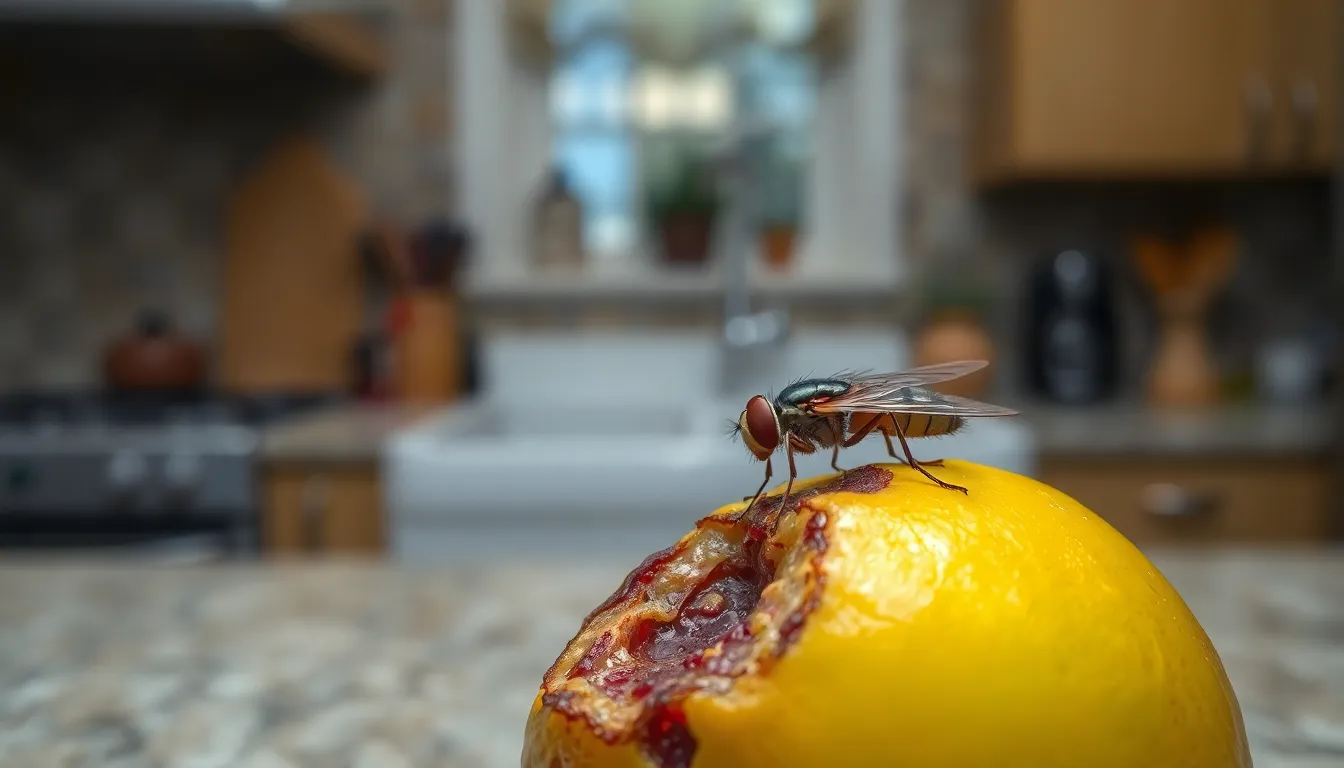
Fruit flies can play a role in disease transmission by acting as carriers of various pathogens. Their ability to contaminate food makes them a potential threat to food safety.
Mechanisms of Disease Transmission
Fruit flies transmit pathogens primarily through contact with decaying material and subsequently contaminating fresh produce. They feed on fermenting substances, picking up bacteria such as Salmonella and Escherichia coli. When they crawl on food or surfaces, they can deposit these harmful microorganisms, increasing the likelihood of foodborne illnesses. Additionally, their urine and feces may also harbor pathogens that contribute to contamination.
Types of Diseases Associated with Fruit Flies
Fruit flies are linked to several types of diseases, including:
- Gastroenteritis: Caused by pathogens from contaminated food, leading to symptoms such as nausea and diarrhea.
- Salmonellosis: Resulting from ingestion of Salmonella, which can lead to severe gastrointestinal issues.
- Listeriosis: Linked to Listeria bacteria, often associated with contaminated food products.
- Escherichia coli Infections: Pathogenic strains can result in severe abdominal cramps and diarrhea.
Understanding these connections underscores the importance of proper food handling and sanitation practices to minimize health risks associated with fruit flies.
Studies and Research Findings
Research has identified fruit flies as potential carriers of various pathogens, raising concerns about their role in contaminating food. Numerous studies delve into their interaction with harmful microorganisms and how this affects food safety.
Key Research Studies
- Pathogen Transmission: A study published in the Journal of Food Protection revealed that fruit flies can carry Salmonella and other bacteria from contaminated surfaces to clean produce. These flies were monitored in laboratory settings and exhibited significant pathogen transfer rates.
- Contamination in Food Environments: Research conducted by the University of California highlighted the population of fruit flies near food waste contributes to increased microbial load in kitchens and food preparation areas. The work involved sampling surfaces in various environments, confirming a direct link between fly presence and bacterial contamination.
- Reproductive Habits and Disease Spread: A publication in Applied and Environmental Microbiology explored how the rapid reproductive cycle of fruit flies correlates with increased pathogen dissemination. With a life cycle of 8 to 14 days, their ability to multiply quickly enables them to become vectors for diseases.
Analysis of Findings
Research consistently indicates that the behavior of fruit flies can lead to increased risks for foodborne illnesses. The ability to transfer pathogens highlights the importance of sanitation and food safety protocols. Studies also show that targeted control measures significantly reduce fly populations and thus decrease contamination rates. Maintaining food hygiene and monitoring fruit fly activity are crucial steps in managing public health risks associated with these pests.
Implications for Public Health
Fruit flies pose significant implications for public health due to their ability to transfer harmful bacteria. Research confirms that these insects can act as vectors for pathogens, particularly in domestic environments. As they thrive near decaying organic matter, their presence often signifies unsanitary conditions, leading to increased risks of foodborne illnesses.
Pathogen transmission occurs when fruit flies come into contact with contaminated surfaces or decaying food. They can pick up bacteria such as Salmonella and Escherichia coli and subsequently deposit these pathogens on clean produce. This behavior directly contributes to food contamination, significantly impacting food safety.
Studies reveal alarming data about the extent of pathogen transfer rates. For instance, a study published in the Journal of Food Protection shows that a high percentage of fruit flies carried Salmonella from contaminated surfaces to fresh food items. This establishes a clear link between fruit fly activity and the spread of foodborne diseases.
Furthermore, research from the University of California indicates that fruit flies near food waste contribute to increased microbial loads in kitchens, confirming the direct association between their presence and bacterial contamination. Their rapid reproductive cycle exacerbates the problem, enabling quick population increases that further enhance contamination risks.
To mitigate these public health threats, effective sanitation practices are critical. These practices include regular removal of overripe fruits, maintaining cleanliness in food preparation areas, and deploying traps to control fruit fly populations. Implementing stringent food handling protocols remains essential to minimize health risks linked to fruit flies, ultimately protecting public health.
Understanding the role of fruit flies in food safety is crucial. These tiny insects may seem harmless but can pose significant health risks by transferring harmful bacteria from decaying organic matter to fresh produce. Their rapid reproduction and attraction to unsanitary conditions make it essential for individuals and businesses to adopt strict sanitation practices.
By maintaining cleanliness in food preparation areas and managing fruit fly populations, it’s possible to minimize the risk of foodborne illnesses. Awareness of the potential dangers associated with fruit flies can help ensure safer food handling and protect public health. Prioritizing hygiene and monitoring these pests is key to preventing contamination and safeguarding well-being.